
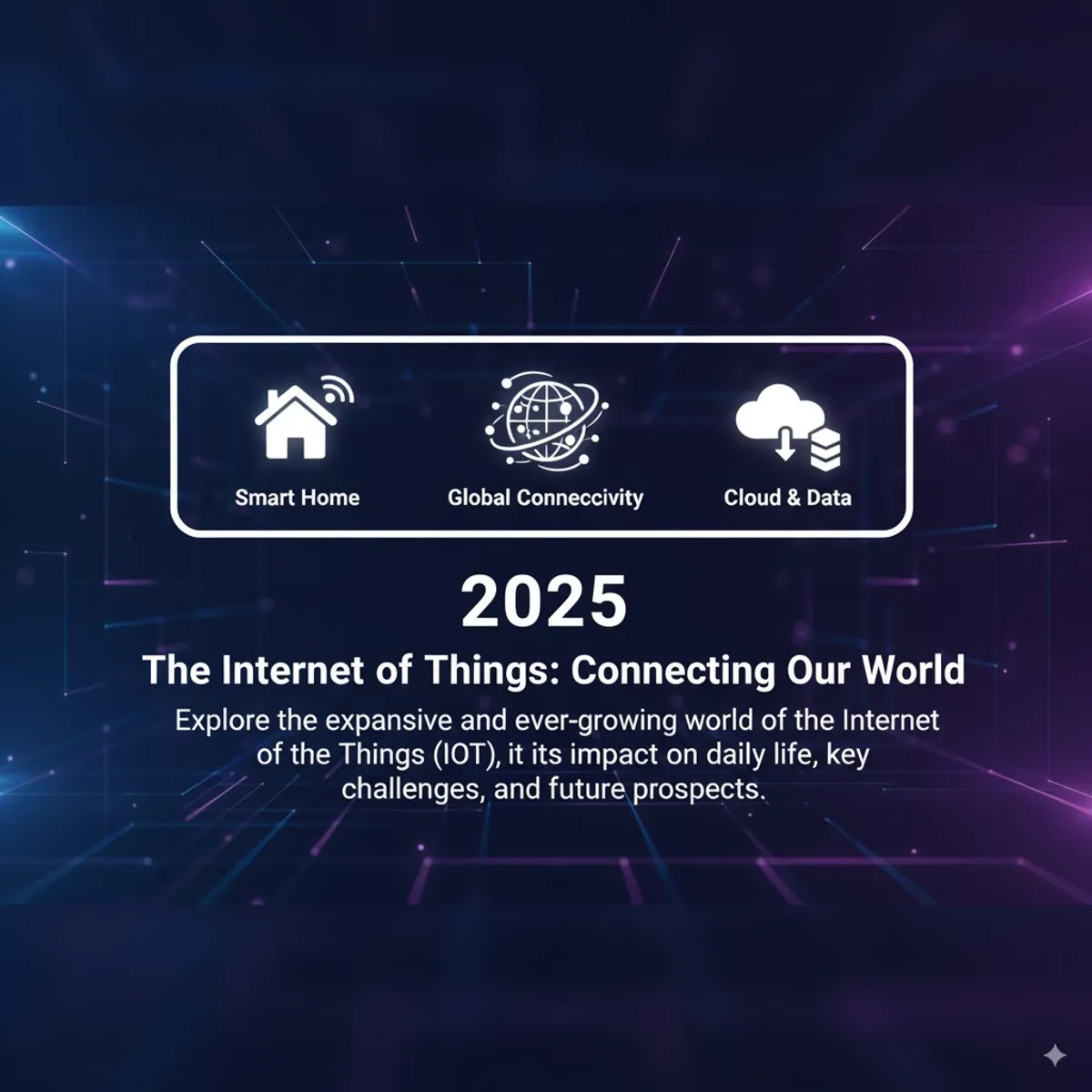
The Ubiquitous Reach of the Internet of Things (IoT)
The Internet of Things (IoT) has moved from simple “smart bulbs” to Hyper-Connected Ecosystems. In 2025, IoT is about the convergence of 5G, Edge AI, and Digital Twins, creating a real-time bridge between the physical and digital worlds.
The Connectivity Backbone
We have moved beyond simple Wi-Fi. Modern IoT relies on specialized protocols designed for specific constraints:
- Matter: The new unified standard for smart homes, ensuring devices from Apple, Google, and Amazon finally talk to each other.
- LoRaWAN & NB-IoT: Long-range, low-power connectivity for smart agriculture and industrial monitoring.
- MQTT (Message Queuing Telemetry Transport): The lightweight “de facto” standard protocol for IoT messaging due to its minimal overhead.
Explanation (The Rise of Edge AI)
In 2025, IoT devices don’t just send raw data to the cloud. Edge AI allows a security camera to detect an intruder or a sensor to identify a machine failure locally, reducing latency and enhancing privacy.
IoT in the Professional Sphere
- Industrial IoT (IIoT) & Industry 4.0: Digital twins allow factory managers to simulate changes in a virtual model before applying them to physical production lines.
- Healthcare (IoMT): Continuous Glucose Monitors (CGMs) and smart pacemakers now stream data directly to doctors in real-time.
- Smart Infrastructure: 5G-enabled traffic sensors in cities reduce congestion by dynamically adjusting signal timings based on real-time vehicle density.
The Critical Challenge: The Security Paradox
Danger (The Mirai Legacy)
The greatest threat to IoT remains the lack of standardized security. Millions of “zombie” devices with hardcoded passwords still form massive botnets used for record-breaking DDoS attacks.
Conclusion
The future of IoT is invisible. Computers will disappear into our walls, floors, and clothing, responding to our needs before we even express them. As we move toward 2030, the focus will shift from “connecting things” to “orchestrating intelligence” across our entire environment.
Recommended for You
Explore more articles on similar topics and continue reading.