
The Transformative Power of Artificial Intelligence (AI)
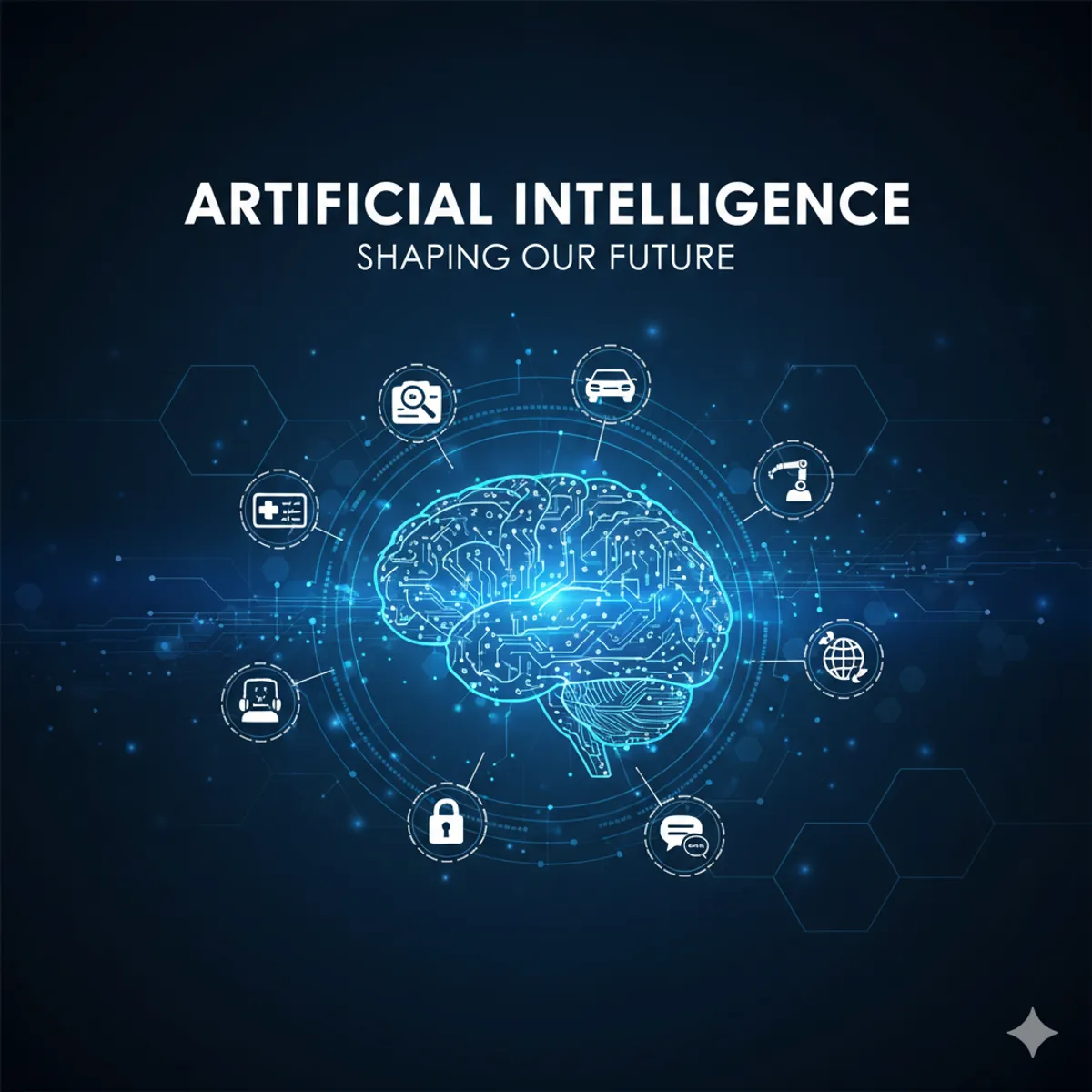
Artificial Intelligence (AI) has rapidly moved from the realm of science fiction to a central force in modern technology. In 2025, we are no longer just talking about chatbots; we are seeing Agentic AI systems capable of reasoning, planning, and executing complex multi-step workflows with minimal human intervention.
What is AI? A Concise Overview
At its core, Artificial Intelligence refers to the simulation of human intelligence processes by machines. Modern AI, however, has evolved into Generative AI (GenAI), which doesn’t just analyze data but creates new, original content—from code and images to complex research papers.
Definition (Beyond simple automation)
Modern AI is defined by Foundational Models—large-scale neural networks trained on massive datasets that can be fine-tuned for a multitude of downstream tasks, representing a shift from task-specific AI to general-purpose intelligence.
The Engine of Modern AI: Transformer Architecture
The current AI boom is largely credited to the Transformer architecture, introduced in 2017. Unlike previous architectures (like RNNs or LSTMs), Transformers use a Self-Attention mechanism to process data in parallel, allowing models to understand the context of a word based on every other word in a sentence, regardless of distance.
# Conceptual Self-Attention (Simplified)# Weighting the importance of words in a sentencesentence = "The AI model processed the data"weights = { "AI": 0.8, # High importance for context "model": 0.7, "processed": 0.5, "data": 0.6}Key Disciplines Driving Advancements
- Large Language Models (LLMs): Models like GPT-4o, Claude 3.5, and Llama 3 are shattering benchmarks in reasoning and coding.
- Retrieval-Augmented Generation (RAG): A technique that connects LLMs to external, real-time data sources to reduce hallucinations and provide up-to-date information.
- Multi-Modal AI: Systems that can simultaneously process and generate text, images, audio, and video (e.g., OpenAI’s Sora or Google’s Gemini 1.5 Pro).
- Neural Architecture Search (NAS): Using AI to design even more efficient and powerful AI architectures.
AI Applications: Revolutionizing Industries
Tip (The Rise of AI Agents)
By 2025, we are seeing the transition from “Co-pilots” (assistance) to “Agents” (autonomy). These agents can browse the web, use software tools, and collaborate with other AIs to complete goals.
- Software Engineering: Tools like GitHub Copilot and Cursor are now handling up to 50-70% of boilerplate code generation, allowing developers to focus on high-level architecture.
- Healthcare: AI-driven AlphaFold has predicted the structures of nearly all known proteins, accelerating drug discovery by decades.
- Finance: Real-time risk assessment and high-frequency trading powered by sub-millisecond AI inference.
- Climate Science: Using AI for hyper-local weather forecasting and optimizing renewable energy grids.
Ethical Considerations and Challenges
Danger (The Alignment Problem)
As AI becomes more autonomous, the “Alignment Problem”—ensuring AI goals perfectly match human values—becomes critical. Misalignment can lead to unintended consequences, even if the AI is technically “successful” in its task.
- Deepfakes and Misinformation: The ease of generating hyper-realistic media poses a significant threat to digital trust and democracy.
- Algorithmic Bias: Diversity in training data is mandatory to prevent AI from inheriting and scaling systemic biases.
- Environmental Impact: Training frontier models requires immense compute power. The industry is pivoting toward Sustainable AI and more efficient inference techniques like quantization.
Conclusion
Artificial Intelligence is the defining technology of our era. As we move closer to Artificial General Intelligence (AGI), the focus shifts from if we can build it to how we can guide it to ensure a safe, equitable, and highly productive future for all.
Recommended for You
Explore more articles on similar topics and continue reading.